
How Does E-Filing Speed Up Probate in Charleston County?
A personal representative in McClellanville used to face a hundred-mile round trip to file paperwork at 84 Broad Street, then a hunt for a parking spot near the Historic Courthouse. Since October 2020, that same filer has been able to upload most documents from a kitchen table in Awendaw, James Island, or Folly Beach. The Charleston County Probate Court runs the only probate e-filing program in South Carolina, a pilot system known as EZ-Filing, and it has reshaped how families and attorneys handle estate administration in the Lowcountry.
What Is the Charleston County Probate Court’s EZ-Filing System?
EZ-Filing is the electronic document submission system used by the Charleston County Probate Court for estate, trust, adult guardianship, and conservatorship cases. The South Carolina Supreme Court authorized it as a pilot program effective October 28, 2020, making Charleston the first and so far only county where probate filings can be submitted online.
The pilot program was established by order of South Carolina Supreme Court Chief Justice Donald Beatty under Article V, Section 4 of the South Carolina Constitution, on the recommendation of the Probate Court Judges Advisory Committee. The Charleston County Probate Court handles roughly 2,200 estate cases per year, and Probate Judge Irvin G. Condon’s office had been considering electronic filing for some time before COVID-19 courthouse closures pushed it forward.
South Carolina’s Court of Common Pleas adopted statewide e-filing for civil cases in stages from 2015 through 2019, but probate has been on its own track. Charleston County remains the only South Carolina probate court running an e-filing system, and the pilot may expand to other counties by future order of the Supreme Court.
What Documents Can Be Filed Electronically Through EZ-Filing in Charleston County?
Most routine probate filings can go through EZ-Filing, including the Application for Informal Probate (Form 300ES), Information to Heirs and Devisees (Form 305ES), inventories, accountings, motions, petitions, and proposed orders. The system covers estate, trust, adult guardianship, and conservatorship cases pending in Charleston County after October 28, 2020.
For most estates, virtually every recurring filing during administration can be submitted online once the case is open.
Common e-fileable filings include:
- Application for Informal Appointment (Form 300ES) and supporting affidavits.
- Information to Heirs and Devisees (Form 305ES).
- Renunciation of Right to Administer (Form 302ES).
- Affidavit for Collection of Personal Property in a Small Estate (Form 420ES).
- Inventory and Appraisement (Form 350ES).
- Annual and final accountings, proposed orders, motions, and procedural pleadings.
Registered Filers can view all submitted images on each case for which they have an account, which means the personal representative or counsel sees the full case file in one place rather than mailed copies.
What Documents Still Require In-Person or Mail Filing?
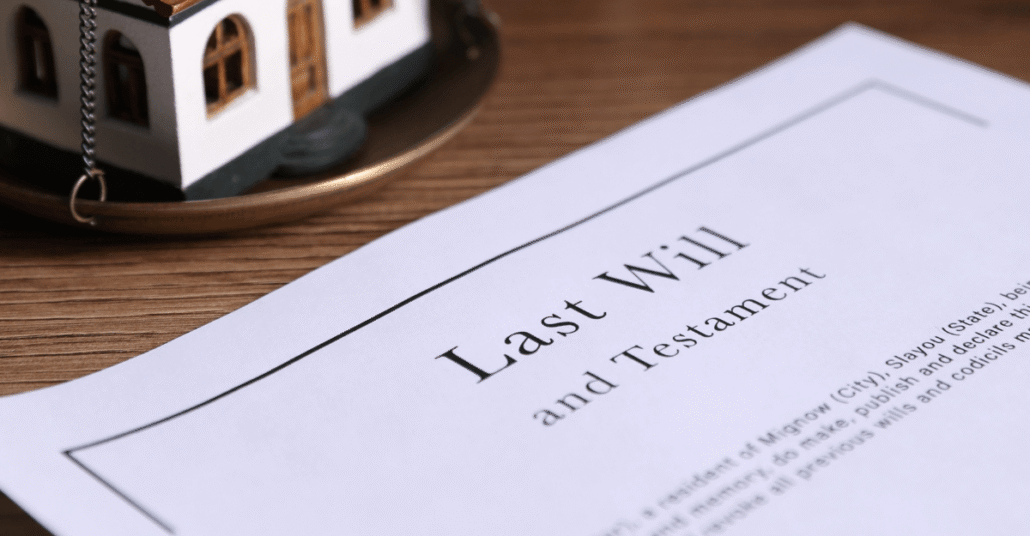
Original testamentary documents — the decedent’s signed Last Will and Testament and any codicils — must still be physically delivered to the Charleston County Probate Court. Original death certificates and certain bond instruments also generally require paper filing, and the court reserves the authority to require traditional submission for unusual cases.
This is where overpromising would mislead. The October 2020 SC Supreme Court order specifically excludes original testamentary documents from electronic submission. The court must hold the physically signed will, both for evidentiary integrity and for long-term archival under South Carolina probate practice.
Documents that still require paper or drop-box filing:
- Original Last Will and Testament and any codicils.
- Certified original death certificates (no copies).
- Original bond instruments and certain notarized affidavits.
- Filings the court deems irrelevant, abusive, or duplicative.
Drop boxes are available outside both the Estate Division at 84 Broad Street, Third Floor, and the Judicial Building at 100 Broad Street, Suite 469, allowing after-hours physical delivery without an in-court visit.
How Much Does EZ-Filing Cost in Charleston County?
The EZ-Filing system charges a $7 vendor convenience fee for each filing, separate from the underlying probate filing fees set by South Carolina law. Standard probate filing fees in Charleston County still apply and range from approximately $25 to $95 for opening an estate, depending on the value of probate assets.
The cost picture has two layers. The first is the convenience fee paid to the third-party vendor that runs the EZ-Filing platform. The second is the statutory filing fee that the Probate Court itself charges, which has not changed.
Cost breakdown for a typical Charleston County estate:
- $7 vendor convenience fee per filing through the EZ-Filing portal.
- $25 to $95 statutory probate filing fee to open an estate, scaled to the value of probate assets.
- $40 to $120 creditor publication fee, paid when the estate opens.
- $150 filing fee for a formal petition accompanied by a summons.
Credit card payments incur a small processing surcharge, and the court continues to accept cash or check at the courthouse.
How Does EZ-Filing Save Time on Probate in Charleston County?
EZ-Filing eliminates round-trip travel to downtown Charleston, allows submissions outside court business hours, and gives registered filers immediate access to file-stamped copies of every document in the case. For a personal representative in Mount Pleasant, James Island, Awendaw, or Folly Beach, that often saves several hours per filing and avoids parking costs.
The county’s geography is part of the story. Charleston County spans roughly a hundred miles end to end, from McClellanville at the north to the southern reaches of Edisto and Wadmalaw. A personal representative living in McClellanville or Hollywood was once looking at a half-day trip every time a filing needed to go in.
Specific time savings include:
- No round-trip drive to 84 Broad Street and no parking fees at the King and Queen Streets garage or 85 Queen Street garage.
- Around-the-clock availability instead of the courthouse’s 8:30 a.m. to 5:00 p.m. weekday window.
- File-stamped copies returned electronically the same day a filing is accepted.
- Immediate access to every image on the case for any Registered Filer with an account.
- Faster correction of rejected filings, since a second courthouse trip is no longer required.
For an attorney with cases across multiple counties, the system also reduces the marginal cost of taking on a Charleston-area estate.
What Parts of the Probate Timeline Does EZ-Filing Not Speed Up?
Statutory waiting periods are unaffected by electronic filing. The eight-month creditor claim period, the ninety-day inventory deadline, and the thirty-day notice to heirs all run on the same clocks regardless of how documents are submitted. The court’s substantive review time and third-party processes also remain the same.
South Carolina probate is governed by Title 62 of the South Carolina Code, and the most consequential timelines are statutory rather than procedural. No filing technology can compress them.
Items unaffected by electronic filing:
- The eight-month creditor claim period under Section 62-3-801, running from the first publication of the notice to creditors.
- The ninety-day inventory and appraisement deadline under Section 62-3-706.
- The thirty-day notice to heirs and devisees under Section 62-3-306.
- The surviving spouse’s elective share window of eight months from death or six months from probate, whichever is later.
- Bank, brokerage, and real estate retitling at third-party institutions, each of which has its own internal processes.
A typical uncontested Charleston County estate still takes eight to twelve months from opening to closing because of the mandatory creditor claim period, regardless of how quickly forms are submitted.
How Do You Register for and File Through Charleston County’s EZ-Filing System?
Filers register at the EZ-Filing portal, create a username and password, and complete an Electronic Registration Agreement. Once registered, they can initiate new cases, file documents in existing cases, pay fees by credit card, and receive electronic service from the Charleston County Probate Court.
Registration follows the rules in the Charleston County Probate Court Electronic Filing Rules. Both attorneys and unrepresented interested persons can register, and out-of-state attorneys admitted pro hac vice may register through the same procedure under Rule 4. Once a Registered Filer is in the system, the email address on the account becomes the address for all electronic service in pending cases.
Steps to register and submit a filing:
- Visit the EZ-Filing portal and select the South Carolina jurisdiction.
- Complete the Electronic Registration Agreement and create credentials.
- Choose “new case” or “existing case” and follow the prompts.
- Attach documents in PDF format that meet the formatting rules in Rule 7 (legible scans, proper signatures).
- Pay the convenience fee and any required statutory fee by credit card.
The court reviews submissions and either accepts them, rejects them automatically for formatting issues, or returns them for correction. Rejected filings can be cured and resubmitted without a courthouse visit.
What Happens If the EZ-Filing System Has a Technical Failure?
The Charleston County Electronic Filing Rules include a backup procedure for technical failures and difficulties. A registered filer who cannot submit a document electronically may preserve the filing time by traditional filing, email, or fax, accompanied by a certification that the filer attempted to e-file at least twice unsuccessfully.
The technical-failure protocol matters most when a deadline is closing. If the system is down or returning errors, the registered filer can submit the document by physical delivery to 84 Broad Street, by email with a signed PDF attachment, or by fax of the first and signature pages. Each alternative submission must include a certification describing the technical issue.
Backup options when the system fails:
- Physical delivery to the Estate Division at 84 Broad Street, Third Floor, during business hours.
- Email submission with a signed PDF and a certification of the technical issue.
- Fax of the first and signature pages with the same certification.
Important caveat: alternative submission preserves the filing time but does not complete the filing. The actual electronic submission must follow within one business day after the technical issue is resolved, along with payment of any required filing fees.
Talk to a South Carolina Probate Attorney About Your Charleston County Estate
Probate work has historically been local because the paperwork lived at the local courthouse. The Charleston County Probate Court’s EZ-Filing system has changed that calculation. Families in the Lowcountry can now work with the right South Carolina counsel for their situation rather than the closest one geographically.
At De Bruin Law Firm, we represent families across South Carolina on probate, estate planning, and real estate matters. Our attorneys handle Charleston County estates through the EZ-Filing system, coordinate with personal representatives by phone and video, and travel for hearings when in-court appearances are required.
To schedule a consultation, call our office at (864) 982-5930 or use the contact form on our website. There is no charge for the initial conversation, and we are happy to talk with families anywhere in South Carolina, including Charleston County and the broader Lowcountry.
Frequently Asked Questions
Is EZ-Filing required for attorneys in Charleston County probate cases?
Electronic filing is encouraged but not strictly mandatory across all probate filings. The Charleston County Electronic Filing Rules permit traditional paper filing as a backup, and certain documents must still be submitted on paper.
Can I e-file a small estate affidavit in Charleston County?
Yes, the Form 420ES small estate affidavit is one of the routine forms accepted through EZ-Filing. Small estates valued at $25,000 or less, after liens and encumbrances, can be administered through this affidavit after a thirty-day waiting period.
Do other South Carolina counties offer probate e-filing?
Not yet for probate; Charleston is the only county currently running an e-filing pilot for Probate Court. South Carolina’s Court of Common Pleas operates a separate statewide e-filing system that has covered all forty-six counties since 2019.
Does electronic filing change the eight-month creditor claim period?
No, the creditor claim window is set by South Carolina statute and runs from the first publication of the notice to creditors, regardless of how the filing was submitted. The same statutory clock applies to estates opened on paper or through EZ-Filing.
Can I file the original will electronically?
No, the original Last Will and Testament must still be physically delivered to the Charleston County Probate Court. The Estate Division at 84 Broad Street accepts originals in person or through the after-hours drop box outside the building.




Leave a Reply
Want to join the discussion?Feel free to contribute!