
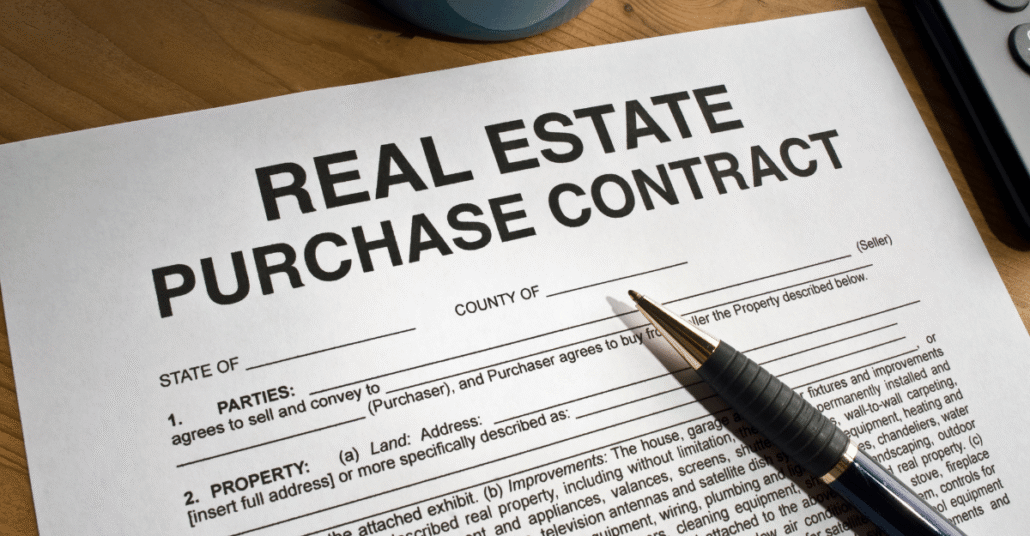
What Are Common Real Estate Contract Disputes in South Carolina?
Who is to blame when a South Carolina closing falls apart? Usually the answer is already in writing, buried in a deadline, a disclosure answer, or a clause that seemed harmless on signing day. That is why so many real estate contract disputes in South Carolina are decided by the paperwork long before a judge sees them.
Picture a buyer whose rate lock expires while the seller stalls, or a seller paying two mortgages because a buyer walked away a week before closing. Both usually start small: a repair promise made over the phone, a form filled out from memory, a notice sent one day late.
What Real Estate Contract Disputes Come Up Most Often in South Carolina?
Most South Carolina real estate contract disputes involve undisclosed property defects, earnest money claims after a deal collapses, a buyer or seller refusing to close, financing or appraisal failures, and title or boundary problems. Many trace back to vague contract language, missed deadlines, or a disclosure statement that left out something the seller knew.
Buyers bring most disclosure and specific performance claims, and sellers are usually the ones chasing earnest money after a buyer walks. New construction complicates the picture. Along the I-85 corridor in Greenville, Spartanburg, and Anderson Counties, many sales run on builder-drafted contracts instead of the standard residential forms, with deadlines and deposit rules of their own.
Does a South Carolina Real Estate Contract Have to Be in Writing?
Yes. South Carolina’s Statute of Frauds, S.C. Code § 32-3-10, bars a lawsuit to enforce a contract for the sale of land unless the agreement, or a memorandum of it, is in writing and signed by the party being held to it. Handshake deals and verbal side promises generally cannot be enforced.
Courts read South Carolina’s Statute of Frauds alongside the contract’s own terms, and the two together can wipe out promises a buyer was counting on.
In Anderson v. Pearson, a 2025 Court of Appeals decision from Spartanburg County, a buyer won an order forcing the sale of a 21.99-acre tract, and the appellate court reversed it. The seller’s alleged survey promise was not in the written contract, and the merger and non-reliance clauses barred the buyer from relying on promises made outside it.
The promises that most often go missing from the paperwork:
- Repairs the seller agreed to make “before closing”
- A move-out date that differs from the closing date
- Furniture, appliances, or equipment staying with the house
- A survey, septic inspection, or other document one side promised to provide
What Can a Buyer Do When a Seller Hides a Known Defect?
A buyer can sue the seller for actual damages caused by a knowing failure to disclose under S.C. Code § 27-50-65, and the court may also award attorney fees to the prevailing party. The buyer must generally show the seller actually knew about the problem and either hid it or answered the disclosure statement falsely.
South Carolina’s Residential Property Condition Disclosure Act requires the seller to deliver the disclosure statement before the buyer signs the contract. The form asks about water and sewer systems, the roof and foundation, mechanical systems, termites, zoning, environmental hazards, and existing leases. Lowcountry and lakefront buyers should read the flood section of the current form, updated in 2025, which asks about flood zones, insurance claims, and federal disaster aid.
A seller who learns an answer was wrong must deliver a corrected statement or make the repair before closing. Sellers may also mark “no representation” instead of answering, which shifts more of the burden onto the buyer’s inspection.
Some sales skip the form entirely. Excluded transfers include:
- Foreclosure sales and other court-ordered transfers
- Transfers made during estate administration
- Transfers between co-owners
- Sales where both parties agree in writing to skip the form
Can You Sue the Real Estate Agent Over a Bad Disclosure?
Usually not under the disclosure statute itself. In Isaac v. Onions (2025), the South Carolina Supreme Court held that the Residential Property Condition Disclosure Act creates no private claim against real estate licensees. Agents still must deal honestly, and buyers may pursue other claims when an agent knowingly gives false information.
The buyers in that case closed on a home after the listing agent described an earlier CL-100 wood infestation report as “good” without handing it over. Two days after closing, heavy rain flooded the crawl space, and a later inspection found wood decay fungus.
The negligent misrepresentation claim failed on reliance. The buyers’ own agent testified he never relied on the statement and planned to verify the repairs himself. The Supreme Court’s opinion also confirms that licensees have no duty to discover hidden defects or to inspect a property to check the seller’s answers.
Order your own inspection and CL-100, read both reports yourself, and request any prior reports in writing. An agent who knowingly misleads a buyer can still face a complaint before the South Carolina Real Estate Commission.
Who Gets the Earnest Money When a South Carolina Deal Falls Apart?
Under S.C. Code § 40-57-136(E), a broker holding disputed earnest money must keep it in the trust account until the buyer and seller sign a separate written release, a court rules in an interpleader action or other order, or the parties resolve the dispute through voluntary mediation. The broker cannot simply pick a side.
A valid release carries the signature of everyone claiming the money. A clause in the original purchase agreement does not count, and neither does one party’s demand letter to the broker.
Interpleader costs money. The broker deposits the funds with the court and steps aside. On a modest deposit, filing fees and attorney time can consume much of what is at stake, so many of these disputes settle once both sides run the numbers.
If the other side refuses to sign:
- Reread the contract’s default and termination provisions to see whose claim is stronger.
- Gather every notice, email, and deadline extension in date order.
- Send a written demand that cites the specific contract terms you rely on.
- Propose mediation before anyone files suit.
What Happens If a Buyer Backs Out During the Due Diligence Period?
South Carolina’s standard residential agreement gives buyers a due diligence period to inspect and negotiate. A buyer who terminates properly within that window, with any required notice and fee, generally walks away cleanly. A buyer who misses the deadline or terminates improperly may be locked into an as-is contract and exposed to damages.
Since 2022, the standard form has folded inspections and repair negotiations into the due diligence window itself, replacing the older separate repair-request process. Any repair deal has to be reached and put in writing before that window closes. Timing drives most of these disputes. A notice sent one day late, or without the required fee, is the most common way buyers lose their exit. A buyer who then refuses to close may be treated as the party in default, which puts the earnest money in play.
The mistakes that cost buyers their exit tend to look like this:
- Scheduling inspections late in the window
- Treating a verbal repair agreement as binding
- Assuming a deadline moves without a signed extension
- Forgetting that builder and FSBO contracts may have no due diligence period at all
Can a Buyer Force a Seller to Close in South Carolina?
Sometimes. South Carolina courts treat land as unique, so a buyer may ask a court for specific performance, an order requiring the seller to complete the sale. The buyer must typically prove a valid written contract and that they were ready, willing, and able to close on the agreed terms and timeline.
Because specific performance is an equitable remedy, the judge has room to say no. In Greenville and Spartanburg Counties, these cases are often referred to the master-in-equity, a judicial officer who hears non-jury matters such as foreclosures and equitable claims. Courts look hard at whether the buyer acted promptly and kept financing in place.
A buyer suing to enforce the contract can also record a notice of pendency, often called a lis pendens, with the clerk in the county where the property sits. The lis pendens statute permits filing up to 20 days before the complaint or any time afterward. Anyone checking title will see the case, which makes a sale to someone else very difficult.
What Remedies Does a Seller Have When a Buyer Defaults?
When a buyer defaults without a valid contractual exit, a South Carolina seller may keep the earnest money if the contract treats it as liquidated damages, or sue for actual losses such as a lower resale price and added carrying costs. The contract’s default clause usually controls which remedy is available.
Keeping the deposit is not automatic. Some default clauses make the earnest money the seller’s only remedy, while others let the seller choose between keeping it and pursuing a larger claim. A seller pursuing actual losses should expect to show reasonable efforts to resell.
From the day of default, a seller should keep records of:
- Mortgage interest, taxes, insurance, and HOA dues during the extra months
- Utilities and upkeep on a vacant property
- The gap between the original price and the eventual resale price
- Relisting and marketing expenses
How Do Title, Survey, and Boundary Problems Derail Closings?
Title defects, unreleased liens, survey errors, and boundary encroachments can stall or kill a South Carolina closing. Because a licensed South Carolina attorney must supervise residential closings, many of these problems surface during the title examination, giving the parties a chance to cure them before the closing date passes.
Rural tracts in Pickens and Anderson Counties are a frequent source of boundary disputes. Older deeds may describe land by trees or fences that have since moved, and a new survey can put a driveway on a neighbor’s lot. Lake Hartwell shoreline lots raise separate questions about where private ownership ends and Corps of Engineers land begins.
Other title issues that regularly push back closing dates:
- Gaps in the chain of title from an old estate that was never administered
- Inherited land with co-owners who have not all signed
- Legal descriptions that do not match between older and newer deeds
- Restrictive covenants that conflict with the buyer’s planned use
Most contracts build in a cure period that starts when the buyer objects. If the seller cannot fix the defect in time, the buyer can usually extend the closing date, accept the title as it stands, or terminate and recover the deposit.
How Long Do You Have to File a Real Estate Contract Claim in South Carolina?
Most breach of contract claims in South Carolina must be filed within three years under S.C. Code § 15-3-530. Fraud claims follow a discovery rule, so the clock generally starts when the buyer discovered, or reasonably should have discovered, the facts behind the fraud. Contracts signed under seal can carry a longer period.
The “reasonably should have discovered” standard works against buyers who ignore warning signs. A ceiling stain, a musty crawl space, or an inspector’s note recommending further evaluation can start the clock early. The limitations chapter reserves 20 years for actions on sealed instruments and on written contracts secured by a mortgage. Whether a given agreement qualifies is worth settling early.
The contract often imposes far shorter deadlines of its own. Notice periods for title objections and default can run in days, and missing one can waive a claim years before any statute of limitations expires.
Do Real Estate Contract Disputes in South Carolina Have to Go to Mediation?
In Greenville County, most civil cases in the Court of Common Pleas must go through mediation or arbitration within 300 days of filing. Real estate contract disputes can resolve at that stage, often months before a judge or the county’s master-in-equity ever hears the case.
Greenville County’s ADR program also requires the parties to file a Proof of ADR form on time, and a missing form triggers a rule to show cause. Complex cases and cases mediated before filing can be exempt. Mediation is private, and nobody is forced to agree. Real estate disputes tend to respond well because the parties can build terms no court would order, such as a repair credit or a split of the deposit.
A typical path from disagreement to resolution:
- One side sends a written demand citing the contract.
- If talks stall, a lawsuit is filed in the Court of Common Pleas.
- The case goes to mediation within the county’s deadline.
- Unresolved claims proceed to a hearing before a judge or the master-in-equity.
Talk With a South Carolina Real Estate Attorney About Your Contract Dispute
Arguing does not stop the contract’s clock. At De Bruin Law Firm, our attorneys represent buyers and sellers across South Carolina in disputes over disclosures, earnest money, title defects, and failed closings. We review the contract, pin down which deadlines still matter, and pursue a resolution through negotiation, mediation, or litigation. Call De Bruin Law Firm at (864) 982-5930 to schedule a consultation. Our office is at 16 Wellington Ave in Greenville, and we work with clients throughout South Carolina.
Frequently Asked Questions
Can a seller back out of a signed contract for a better offer?
Not without risk. A seller who abandons a valid contract to take a higher offer can face a specific performance suit or a damages claim from the original buyer. Sellers who want that flexibility need to negotiate it into the contract before signing.
Can a seller accept backup offers while under contract?
Yes, as long as the backup contract makes clear that it is secondary and takes effect only if the first deal terminates. Without that condition, two buyers can end up with competing claims to the same property.
Does selling “as-is” protect a seller who knew about a defect?
Not fully. An as-is clause generally means the seller will not make repairs, but it does not excuse false answers on the disclosure statement. A seller who conceals a known problem can still face fraud and disclosure claims.
Can I file a lis pendens without filing a lawsuit?
Generally, no. A notice of pendency has to be tied to an action affecting title that is filed or about to be filed. A notice recorded without a genuine claim behind it can be challenged and removed.
What should I do first if I think the other side is about to breach?
Put your concerns in writing and keep performing your own obligations under the contract. A party who stops performing early can end up treated as the one in breach.











Leave a Reply
Want to join the discussion?Feel free to contribute!